



The debate between decentralized finance and traditional banking has moved from theory into measurable 2026 data. DeFi’s total value locked stands at about $98 billion as of March 2026, according to the U.S. Congressional Research Service. The five largest U.S. banks hold about $19.7 trillion in assets, and global traditional banking assets are estimated at around $370 trillion, per CoinLaw’s 2026 statistics. The scale gap is the first thing to understand.
What Is DeFi?
Krungsri Research defines DeFi as an umbrella term for decentralized financial services carried out in the absence of financial intermediaries. The same source says total value locked is the usual market-value measure for the sector. The European Central Bank adds that DeFi is non-custodial: participants manage their digital assets directly without a centralised intermediary.
That is a fundamental difference from a bank account. With a bank, the institution holds your funds and acts as the counterparty. With DeFi, you hold the assets and interact with smart contracts.
What Traditional Banking Still Provides
Traditional banking remains the dominant financial system by assets. The CoinLaw figures show the five largest U.S. banks alone hold about $19.7 trillion, and global banking assets reach roughly $370 trillion. Banks combine deposit-taking, lending, payment processing, and asset management under one regulated roof. They also offer deposit insurance, such as FDIC coverage, which is why most payroll and savings still sit in banks.
The Scale Gap by the Numbers
DeFi’s total value locked is measured differently by different sources. The Congressional Research Service put it at about $98 billion as of March 2026. Krungsri Research cited $70.8 billion in its own snapshot. CoinLaw reported $247 billion in Q2 2025, up 31% year over year. The numbers vary because methodologies, dates, and definitions differ, but all of them are far below the $19.7 trillion held by just the five largest U.S. banks.

DeFi’s Biggest Use Case: Lending
Lending is the largest DeFi segment. Krungsri Research recorded $34.7 billion in lending activity, or 49% of TVL in its cited snapshot. This shows DeFi is being used for real borrowing and lending outside traditional intermediaries, even though its overall size remains small compared with banking.
Speed and Cost Differences
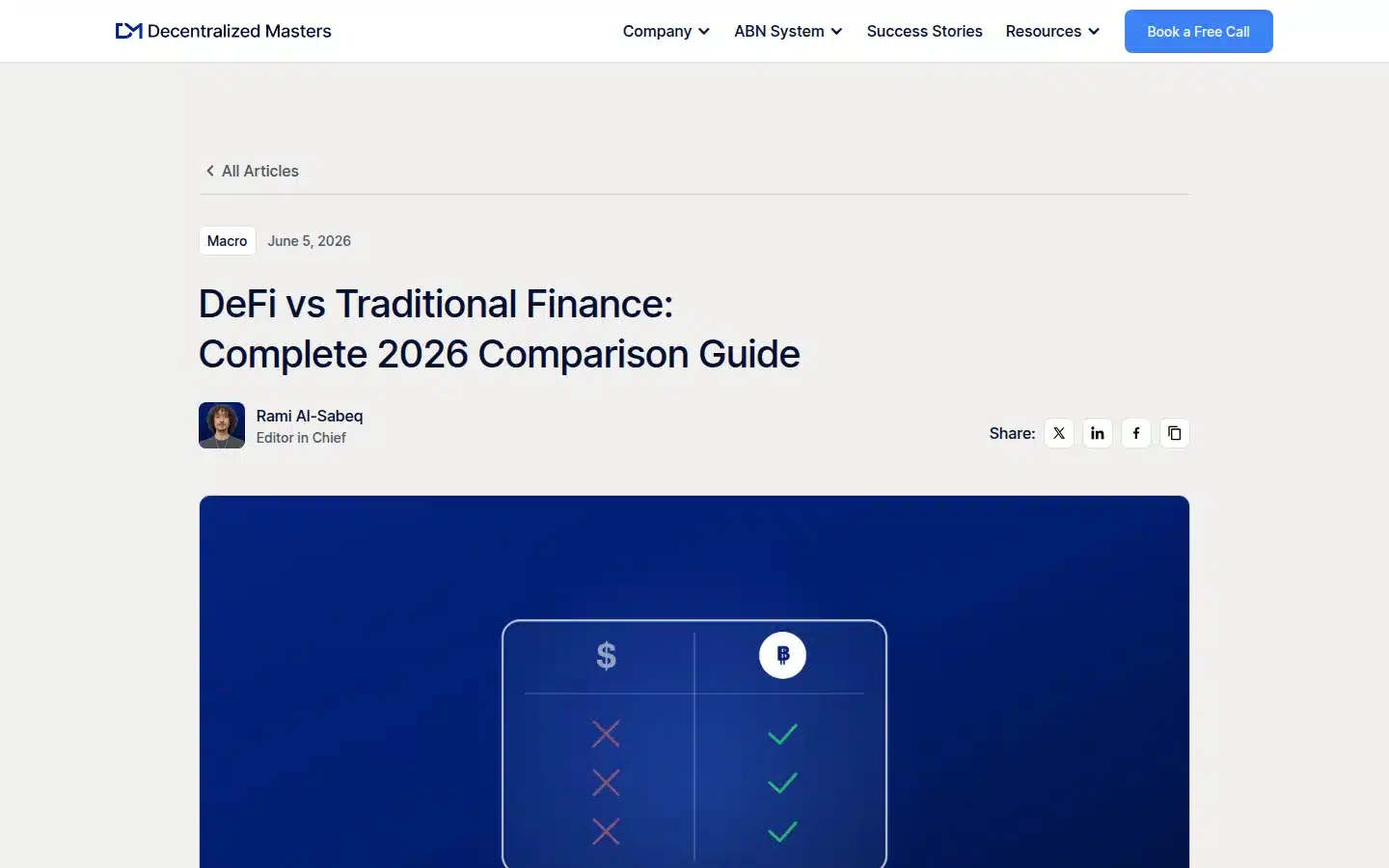
One of the most practical differences is how transactions move. According to a 2026 comparison guide from Decentralized Masters, traditional wire transfers often cost $25–$50 and settle in 1–5 business days, while DeFi stablecoin transfers can cost $0.01–$5 and settle in seconds. Forbes Council also notes that transaction fees on DeFi platforms are typically lower than those charged by traditional banks, especially for cross-border payments.
Historical Context
DeFi has already shown explosive growth. The Dallas Fed reported that at the peak in 2021, DeFi applications exceeded $300 billion in funds committed and $1 trillion in transaction volume. Current TVL is lower than that peak, but the history explains why both retail users and institutions continue to watch the sector.
What It All Means for You
DeFi’s permissionless, non-custodial model and 24/7 global access make it more flexible for programmable and cross-border finance. Traditional banking remains far larger and offers regulated protections that DeFi does not. The two systems are not yet substitutes. They are different tools with different trade-offs, and the sensible approach for most people is to keep everyday money in a bank while exploring DeFi carefully with small amounts.