



If you’ve been following cryptocurrency for any length of time, you’ve likely heard about Ethereum miners, the backbone of what was once the second-largest blockchain network by market capitalization. These individuals and organizations dedicated immense computational power to secure the Ethereum network, validate transactions, and earn rewards in the process. But the landscape shifted dramatically in September 2022 when Ethereum underwent one of the most significant transformations in blockchain history: The Merge.
Understanding what Ethereum miners were, how they operated, and what happened to them after Ethereum’s transition from Proof-of-Work to Proof-of-Stake gives you critical insight into the broader crypto ecosystem. Whether you’re curious about the technical aspects of mining, considering what to do with old mining hardware, or simply want to understand how this monumental shift affected thousands of miners worldwide, you’re looking at a story that reshaped an entire industry overnight.
Key Takeaways
- Ethereum miners used specialized GPU hardware to validate transactions and secure the network under Proof-of-Work until September 2022.
- The Merge transitioned Ethereum from Proof-of-Work to Proof-of-Stake, reducing energy consumption by 99.95% and ending mining on the network permanently.
- After The Merge, ethereum miners shifted to alternative cryptocurrencies like Ethereum Classic and Ravencoin, though profitability dropped significantly.
- Mining hardware investments became largely obsolete overnight, flooding the secondary GPU market and forcing miners to repurpose equipment or exit the industry.
- The ethereum miners era demonstrated that economic incentives could coordinate global computing resources and secure billions in value through decentralized consensus.
- Understanding the transition from mining to staking provides critical insight into blockchain evolution, sustainability, and the risks of protocol changes in cryptocurrency.
What Are Ethereum Miners?

Ethereum miners were participants in the network who used specialized computer hardware to solve complex mathematical puzzles. When you think about miners, picture thousands of computers running simultaneously across the globe, competing to be the first to solve a cryptographic problem. The winner got to add the next block of transactions to the blockchain and received a reward in ETH for their effort.
This wasn’t just about making money, though that was certainly a draw. Miners served as the security layer for the entire Ethereum network. Every transaction you made, every smart contract that executed, every NFT that changed hands, all of it required miners to validate and permanently record those activities on the blockchain. Without miners, the network couldn’t function under the Proof-of-Work consensus mechanism that Ethereum used from its launch in 2015 until September 2022.
The role demanded significant investment. You couldn’t just run mining software on your laptop and expect meaningful returns. Successful miners operated warehouses full of graphics cards, managed cooling systems to prevent overheating, and dealt with electricity bills that could rival small businesses. Some were solo operators running a few rigs in their garage. Others were industrial-scale operations with facilities housing thousands of GPUs working around the clock.

What set Ethereum mining apart from Bitcoin mining was the hardware. While Bitcoin miners had long since moved to specialized ASIC machines, Ethereum’s algorithm was designed to be ASIC-resistant, meaning graphics cards (GPUs) remained the tool of choice. This made Ethereum mining more accessible to everyday people, though the barrier to entry grew steeper as competition increased and profitability margins tightened.
How Ethereum Mining Worked Under Proof-of-Work
Under the Proof-of-Work system, Ethereum mining followed a straightforward but resource-intensive process. Your mining hardware would receive a block of pending transactions from the network. Then it would attempt to find a specific number (called a nonce) that, when combined with the block data and run through a cryptographic hash function, produced a result meeting certain criteria. Think of it as a massive guessing game where your hardware made millions of guesses per second.
The first miner to find the correct nonce would broadcast their solution to the network. Other nodes would verify the solution, which took mere moments, and if correct, that block would be added to the blockchain. The successful miner received a block reward (which started at 5 ETH and was reduced to 2 ETH by 2022) plus all the transaction fees from that block. This happened approximately every 13-15 seconds on Ethereum.
The difficulty of these puzzles adjusted automatically based on how much total computing power was pointed at the network. When more miners joined, puzzles got harder. When miners left, they got easier. This kept block times relatively consistent regardless of how many miners were competing.
Hardware Requirements for Ethereum Mining
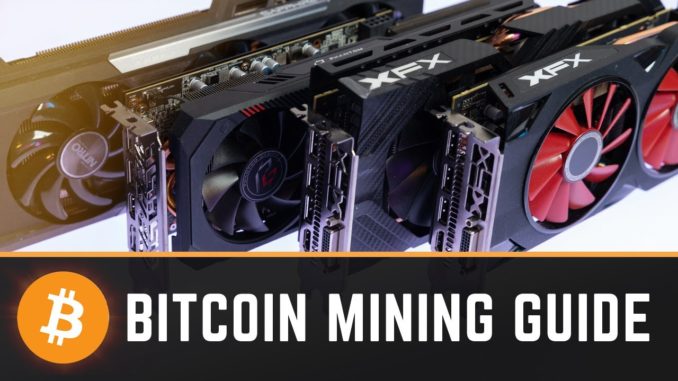
You needed serious hardware to mine Ethereum profitably. The heart of any mining operation was the GPU, specifically, cards with high memory bandwidth and at least 4GB of VRAM, though this requirement increased over time to 6GB and eventually 8GB as the DAG (Directed Acyclic Graph) file grew larger.
Popular choices included NVIDIA’s RTX 3060 Ti, 3070, 3080, and 3090 series, as well as AMD’s RX 5700 XT and RX 6800 models. Top-tier miners ran multiple cards in a single rig, sometimes six or eight GPUs connected to a single motherboard through PCIe risers. You’d also need adequate power supplies, mining rigs could easily draw 1000 watts or more, plus cooling solutions to manage the heat generated by cards running at maximum capacity 24/7.
The investment wasn’t trivial. During the GPU shortage of 2020-2021, graphics cards sold for two or three times their retail price. A single RTX 3080 could cost $1,500 or more on the secondary market. Multiply that by six or eight cards, add the supporting components, and you were looking at $10,000 or more per mining rig. Then came the ongoing electricity costs, which varied dramatically based on your location but could easily run hundreds of dollars monthly for a modest operation.
Mining Software and Pools
Running the hardware was only half the equation. You needed software to connect your GPUs to the Ethereum network and manage the mining process. Popular options included PhoenixMiner, T-Rex, lolMiner, and NBMiner. Each had slightly different features and fee structures, and miners often experimented to find which performed best with their specific hardware configuration.
Most miners joined mining pools rather than going solo. When you mined solo, you received the full block reward if you found a block, but your chances of actually finding one were microscopic unless you controlled a substantial portion of the network’s total hash rate. Mining pools combined the computational power of thousands of miners, found blocks more consistently, and distributed rewards proportionally based on how much work each miner contributed.
Pools like Ethermine, F2Pool, and SparkPool (before it shut down) dominated the landscape. They typically charged a fee of 1-2% of your earnings but provided steady, predictable income instead of the lottery-like randomness of solo mining. You’d point your mining software at the pool’s servers, and the software would handle everything else, receiving work, submitting solutions, and tracking your earnings.
The Transition to Proof-of-Stake: The Merge
The Merge fundamentally changed Ethereum’s consensus mechanism from Proof-of-Work to Proof-of-Stake. This transition had been planned for years, Ethereum’s founder Vitalik Buterin discussed it as early as 2014, but the technical complexity and need to get it right meant multiple delays pushed the timeline back repeatedly. When it finally happened on September 15, 2022, it marked the end of mining on Ethereum.
Under Proof-of-Stake, you don’t need mining hardware or massive electricity consumption. Instead, validators stake 32 ETH and run validator software to propose and attest to blocks. The network randomly selects validators to perform these duties, and they earn rewards for honest participation. This approach uses roughly 99.95% less energy than Proof-of-Work, addressing one of the biggest criticisms leveled at cryptocurrency.
From a technical standpoint, The Merge was remarkable. The Ethereum mainnet effectively merged with the Beacon Chain (which had been running Proof-of-Stake in parallel since December 2020), and the transition happened without any downtime or loss of transaction history. One moment Ethereum was processing blocks through mining, the next through staking. For end users, the experience was mostly seamless. Your wallet still worked. Your transactions still processed. But under the hood, everything had changed.
For miners, though, this was an extinction event. The moment The Merge completed, every Ethereum mining rig on the planet became obsolete for its intended purpose. Years of investment, knowledge, and infrastructure became irrelevant overnight. The Ethereum network’s hash rate, which had peaked at over 1 petahash per second, dropped to zero in an instant.
What Happened to Ethereum Miners After The Merge?
When Ethereum mining ended, miners faced a difficult choice: pivot or exit. The hardware sitting in their facilities still worked perfectly well, but it couldn’t mine Ethereum anymore. The economic calculations that had justified the investment evaporated, and miners scrambled to find alternatives that could keep their operations viable.
Shifting to Alternative Cryptocurrencies
Many miners redirected their GPU hash power toward other Proof-of-Work cryptocurrencies that could still be mined with graphics cards. Ethereum Classic (ETC), the original Ethereum chain that split off in 2016, saw its hash rate explode almost immediately after The Merge. Ravencoin (RVN), Ergo (ERG), Flux (FLUX), and several others also experienced significant hash rate increases as former ETH miners sought new homes for their hardware.
But there was a problem. None of these alternative coins had anywhere near Ethereum’s market capitalization or daily trading volume. The total revenue available from mining all GPU-mineable coins combined was a fraction of what had been available from Ethereum alone. This meant profitability dropped sharply. Coins that might have been marginally profitable before The Merge suddenly had ten times the competition and corresponding difficulty increases, making them far less attractive.
You could still mine these alternatives, but the returns often didn’t cover electricity costs in many regions. Miners in areas with cheap power, think parts of Texas, Kazakhstan, or regions with hydroelectric resources, could sometimes break even or eke out small profits. Those paying average or above-average electricity rates found themselves operating at a loss, forced to either shut down or hope for future price increases that would make their mined coins more valuable.
Repurposing Mining Hardware
Some miners chose to exit the mining business entirely and repurpose or sell their hardware. Graphics cards, after all, have uses beyond cryptocurrency mining. The secondary market flooded with used GPUs as miners liquidated their inventory. Gamers and general consumers could finally find graphics cards at or below MSRP for the first time in years.
Other miners explored alternative uses for their GPU computing power. Machine learning and AI model training require significant GPU resources, and some mining facilities pivoted toward offering cloud computing services or renting their infrastructure to researchers and businesses. This wasn’t a perfect substitute, the profit margins were different, and it required developing new expertise, but it represented a way to monetize existing hardware investments.
A smaller subset of miners converted their operations to run Ethereum validators instead. This required accumulating 32 ETH per validator (which represented a substantial capital requirement, especially if you wanted to run multiple validators to match previous mining income) and learning an entirely different technology stack. Mining and validating are fundamentally different activities, and not all miners had the interest or resources to make that transition.
Economic Impact on the Mining Community
The economic effects rippled far beyond individual miners. Entire ecosystems had developed around Ethereum mining, hardware manufacturers, specialized software developers, mining pool operators, facilities management, even accountants and tax professionals who specialized in mining taxation. When Ethereum mining ended, these supporting industries felt the impact too.
Profitability Changes and Market Adaptation
Before The Merge, a well-optimized mining operation in a region with reasonable electricity costs could generate meaningful income. Depending on your setup and local power prices, you might see returns of $5-10 per day per GPU during profitable periods, though this fluctuated with ETH’s price and network difficulty. Scale that to dozens or hundreds of cards, and you had a sustainable business.
After The Merge, those economics collapsed. The rush of former Ethereum miners to alternative coins created an oversupply of hash power relative to available block rewards. Difficulty on alternative networks spiked, and per-GPU daily revenue dropped to $1-2 or less for most minable coins. In many cases, electricity costs exceeded revenue, creating negative profitability.
This forced market adaptation. Inefficient operations shut down entirely. Miners who’d entered the space during the 2020-2021 bull run, paying inflated prices for hardware, found themselves unable to recoup their investments. Those who’d been in the game longer, with depreciated equipment and established operations, could weather the storm better but still faced challenging economics.
The GPU market corrected rapidly. Prices for both new and used graphics cards fell to levels not seen in years. NVIDIA and AMD, which had enjoyed enormous demand from miners, saw that revenue stream disappear and had to adjust their production and sales projections accordingly. Some hardware that had been designed specifically for Ethereum mining, like certain specialized mining motherboards or GPU models, lost virtually all resale value.
The Legacy of Ethereum Mining
Even though its end, Ethereum mining left a lasting mark on both the cryptocurrency space and the broader technology landscape. For seven years, miners secured billions of dollars worth of value, processed countless transactions, and demonstrated that decentralized networks could function at scale without centralized control.
The mining era proved that economic incentives could coordinate global computing resources toward a common goal. Thousands of independent actors, pursuing their own financial interests, collectively maintained a system that no single entity controlled. This wasn’t just a theoretical exercise, it worked in practice, processing everything from simple value transfers to complex smart contracts that powered the DeFi ecosystem and NFT markets.
Ethereum mining also drove innovation in GPU technology and cooling solutions. The demands miners placed on graphics cards pushed manufacturers to improve efficiency and performance. Techniques developed to cool densely packed mining rigs found applications in data centers and high-performance computing environments. The experience mining provided to participants, understanding blockchain technology, managing distributed systems, calculating ROI on capital-intensive projects, created a knowledge base that many carried into other ventures.
From an environmental perspective, The Merge’s dramatic reduction in energy consumption represented a rare example of a major technology system voluntarily choosing efficiency over the status quo. Critics had long attacked Proof-of-Work cryptocurrencies for their environmental impact. Ethereum’s successful transition to Proof-of-Stake demonstrated that alternatives were possible, even for established networks with enormous economic value at stake.
For you as someone interested in cryptocurrency, understanding this history matters. The mining era shaped Ethereum’s culture, economics, and technical development in ways that continue to influence the network today. And the lessons from The Merge, both the technical achievement and its economic fallout, inform ongoing discussions about sustainability, decentralization, and how blockchain networks should evolve.
Conclusion
Ethereum miners played a vital role in building and securing one of the world’s most important blockchain networks. They invested significant capital, managed complex operations, and competed fiercely for block rewards. But The Merge fundamentally changed the game, ending mining on Ethereum and forcing thousands of miners to adapt or exit.
The transition highlighted both the possibilities and risks inherent in cryptocurrency. Technical innovation can reshape entire industries overnight. Investments that seemed solid can become obsolete through protocol changes. Networks can successfully execute complex upgrades that seemed nearly impossible.
For former Ethereum miners, the path forward varies. Some found new coins to mine, though profitability remains challenging. Others repurposed their hardware or exited mining entirely. A few transitioned to running validators, embracing the Proof-of-Stake model that replaced the system they once supported.
What remains clear is that the Ethereum mining era has ended definitively. You won’t see a return to Proof-of-Work on Ethereum, the technical, environmental, and philosophical reasons for The Merge remain as valid now as they were when the change occurred. The miners who powered Ethereum for seven years have secured their place in cryptocurrency history, even as the network itself has moved on to a different model for the future.
Frequently Asked Questions
What happened to Ethereum miners after The Merge in 2022?
After The Merge, Ethereum miners faced pivoting to mining alternative cryptocurrencies like Ethereum Classic or Ravencoin, selling their GPU hardware on the secondary market, repurposing equipment for AI and machine learning tasks, or transitioning to running Ethereum validators with staked ETH.
Can you still mine Ethereum in 2025?
No, Ethereum mining ended permanently on September 15, 2022, when the network transitioned from Proof-of-Work to Proof-of-Stake through The Merge. Ethereum now uses validators who stake 32 ETH instead of miners with computational hardware.
What hardware did Ethereum miners use before The Merge?
Ethereum miners primarily used high-end graphics cards (GPUs) like NVIDIA RTX 3060 Ti, 3070, 3080, and AMD RX 5700 XT with at least 4-8GB of VRAM. Unlike Bitcoin, Ethereum remained GPU-mineable rather than requiring specialized ASIC machines.
How much did Ethereum miners earn before the transition to Proof-of-Stake?
Before The Merge, profitable Ethereum mining operations could generate approximately $5-10 per GPU daily, depending on electricity costs and ETH prices. Miners received a 2 ETH block reward plus transaction fees for successfully mining blocks every 13-15 seconds.
Why did Ethereum switch from mining to staking?
Ethereum switched to Proof-of-Stake to reduce energy consumption by 99.95%, address environmental criticisms, and improve network scalability. The transition had been planned since 2014 as part of Ethereum’s long-term roadmap to create a more sustainable blockchain.
Is mining other cryptocurrencies profitable after Ethereum miners switched over?
Profitability dropped significantly after The Merge as thousands of Ethereum miners flooded alternative GPU-mineable coins, increasing difficulty dramatically. Most miners now earn $1-2 daily per GPU or operate at a loss unless they have access to extremely cheap electricity.